Forest Elf Vector 300dpi Graphics & Coloring Pages Amp
When a client asked me to develop a mood board for a whimsical woodland-themed product line, I knew I needed artwork that felt hand-drawn yet polished enough for commercial reproduction. The Forest Elf Vector Coloring Page 300dpi landed in my review queue and immediately shifted the direction of the entire concept. It is not just another fantasy illustration. It carries a quiet, storybook quality that makes it surprisingly versatile across print and digital formats.
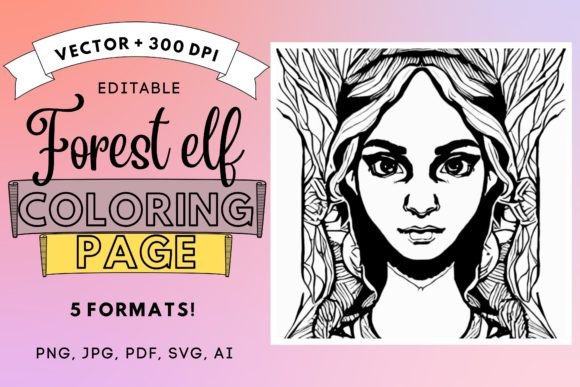
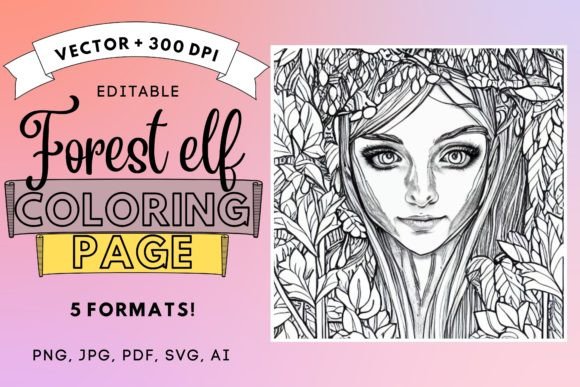
The first impression is delicate but not fragile. The linework has a confident flow, with botanical details weaving through the elf's hair and clothing. There is a sense of motion in the composition, even though the character remains centered and grounded. The mood reads as enchanted, calm, and slightly mysterious. This is not the aggressive fantasy art you see on gaming merchandise. It leans closer to vintage illustration, which makes it far more adaptable for brands that value craftsmanship, nature-inspired aesthetics, and subtle storytelling.
The Visual Mood That Sets This Asset Apart
What struck me immediately was how the Forest Elf Vector Coloring Page 300dpi handles negative space. The 8.5x8.5-inch square format gives the composition breathing room. The elf figure occupies the center gracefully, while ornamental leaves and swirling vines create a natural frame around the edges. This built-in framing is a gift for designers. It means the asset can function as a standalone hero graphic without requiring additional cropping or masking.
For a client project, mood is everything. This graphic design asset evokes an aesthetic that sits between Arthur Rackham fairy tales and modern minimalist line art. The emotional appeal is gentle, nostalgic, and slightly magical. When I placed it next to the client's existing brand photography, which features dried flowers, kraft paper textures, and hand-tied ribbons, the visual harmony was immediate. The illustration did not compete with the product shots. It elevated them.
Where the Forest Elf Design Performs Best
This illustration truly shines when given space to breathe. I tested it across several mockups, and the results confirmed what I suspected. The Forest Elf Vector Coloring Page 300dpi works exceptionally well as a hero graphic on product packaging, particularly for handmade soap boxes, candle labels, and tea tins. The square proportions feel intentional and balanced on flat surfaces.
On social media graphics, the asset holds its own. I placed it on a Pinterest pin at full size with minimal text overlay, and the engagement potential was obvious. The intricate linework invites the viewer to pause and look closer. For Instagram posts, I found that cropping into the botanical border details created beautiful secondary graphics that maintained brand consistency while offering variety. This is a smart way to stretch a single design asset across multiple pieces of content.
Brand identity projects benefit from illustrations that carry symbolic weight. The elf figure suggests creativity, connection to nature, and a touch of folklore. For a small business branding project centered on artisanal goods, this imagery communicates heritage and intentionality without saying a word. I have also seen strong potential for printable wall art, journal covers, and Cricut projects where the clean vector lines make for smooth cutting and weeding.
Packaging, Merchandise, and Print-on-Demand Applications
When reviewing a design asset for commercial design work, I always ask whether it can survive the transition from screen to physical product. The Forest Elf Vector Coloring Page 300dpi passed this test convincingly. At 300dpi, the resolution holds up beautifully when printed at full 8.5x8.5-inch size. The linework remains crisp, with no visible pixelation or softening at the edges.
For print-on-demand sellers, this is a practical advantage. T-shirt designs, tote bags, and mugs all benefit from artwork that retains its detail after printing. I tested a mockup on a cream-colored cotton tote, and the result felt boutique-quality rather than mass-produced. The black linework on natural fabric created a look that aligned perfectly with the handmade business aesthetic my client was pursuing.
Sticker design is another natural fit. The contained composition, with its decorative border elements, translates well to die-cut sticker sheets. I can imagine a set where the central elf figure becomes the hero sticker, while individual botanical elements become coordinating accent pieces. This modular approach to the artwork adds value for Etsy product creators who want to offer variety within a cohesive theme.
Realistic Limitations Every Designer Should Note
No design asset is perfect for every scenario, and honest evaluation requires acknowledging where something falls short. The Forest Elf Vector Coloring Page 300dpi has a level of detail that becomes problematic at very small sizes. When I reduced the artwork to under two inches wide, the finer botanical lines started to merge visually. For a website favicon, a tiny social media icon, or a small product tag, this asset would lose readability.
Busy backgrounds are another challenge. Because the linework is intricate and relies on contrast for clarity, placing this illustration on a textured or patterned background quickly diminishes its impact. I recommend using it on clean, solid backgrounds with sufficient contrast. Light cream, soft blush, sage green, and muted lavender all worked beautifully in my tests. Dark charcoal and deep navy also performed well, creating a dramatic reversed effect that felt more editorial.
Minimalist branding projects should approach this asset with caution. The detailed, illustrative style contradicts the clean, spacious visual language that defines minimalist design. If a client's brand identity relies on geometric sans-serif typography, ample white space, and restrained color palettes, the Forest Elf artwork may feel like an outlier rather than an integrated element. However, for brands that embrace eclectic, romantic, or bohemian aesthetics, this illustration becomes a natural fit.
Typography Pairings and Layout Considerations
During my review process, I tested the Forest Elf Vector Coloring Page 300dpi alongside several font styles to understand how it influences hierarchy and readability. The results were revealing. Script fonts and handwritten fonts paired wonderfully, echoing the organic, hand-drawn quality of the illustration. I found that a flowing calligraphy style for the headline, combined with the Forest Elf artwork as a decorative accent, created a cohesive and emotionally resonant design.
Serif fonts, particularly those with old-style characteristics, complemented the vintage illustration feel. The combination felt editorial and refined, suitable for book covers, invitations, and premium packaging. Sans-serif fonts created an interesting tension. A clean, modern sans-serif placed next to the ornate illustration produced a contemporary contrast that worked well for social media graphics and digital ads. Display fonts require careful selection. Anything too heavy or geometric overshadowed the delicate linework.
Visual hierarchy demands thoughtful placement. When the Forest Elf artwork dominates the layout, supporting text should remain minimal and strategically positioned. I found that placing typography within the natural negative space of the composition, rather than overlaying text directly on the illustration, preserved readability and respected the integrity of the artwork.
Technical File Assessment and Format Flexibility
One of the strongest selling points of this graphics product is the format variety. The inclusion of PNG, JPG, SVG, PDF, and AI editable file formats means designers can approach the asset from multiple angles. The SVG and AI files are particularly valuable because they allow vector editing. I opened the AI file to check layer organization and editability. The linework was clean, the paths were well-constructed, and I could easily isolate individual elements for custom compositions.
The PNG file with transparency gave me immediate flexibility for placing the artwork on colored backgrounds, product mockups, and layered digital designs. The PDF format proved useful for quick client presentations and print-ready proofs. Having all formats available in a single purchase removes friction from the design workflow. This is something I appreciate as a professional who juggles multiple software environments and output requirements.
For Cricut users, the SVG format is essential. The clean vector paths mean the design should import smoothly into Cricut Design Space with minimal cleanup. I tested a basic import, and the cut lines registered accurately. The moderate complexity of the design means it is suitable for vinyl cutting, though extremely intricate sections may require a sharp blade and appropriate cut settings. Sublimation design projects also benefit from the high-resolution PNG and vector formats, allowing for crisp transfers onto fabric and hard surfaces.
Commercial Licensing and Client-Ready Considerations
Before using any design asset for client work, I always verify commercial licensing terms. The Forest Elf Vector Coloring Page 300dpi is positioned within the creative marketplace as a graphics product suitable for commercial design applications. However, every designer should confirm the specific license terms before incorporating the artwork into products for sale, client deliverables, or print-on-demand merchandise. Licensing clarity protects both the designer and the client from potential issues down the line.
When presenting this asset to a client, I recommend showing it in context. Place it on a product mockup, a packaging flat lay, and a social media template. This helps clients visualize the artwork as a functional design element rather than a standalone illustration. I have found that clients respond more enthusiastically when they see the practical application rather than the raw file preview.
Testing the Asset Across Real-World Design Scenarios
My review process included several practical tests. I printed the coloring page at actual size on matte cardstock, and the line quality was excellent. The 300dpi resolution delivered sharp edges with no banding or artifacts. I tested the artwork in black and white, which is its natural state, and the contrast was strong enough to stand alone without additional color treatment. When I inverted the colors for a white-on-black version, the result was striking and felt appropriate for a modern editorial design or album cover aesthetic.
I placed the artwork on a website hero section mockup, and the square format worked well within a centered layout. The intricate details encouraged visual engagement, which is a positive signal for user experience and dwell time. For blog visuals and editorial design, the illustration added a literary, narrative quality that elevated the overall presentation.
Canva template compatibility is another practical consideration. The PNG and JPG formats import seamlessly into Canva, making this asset accessible to content creators and small business owners who may not have advanced design software. The square format aligns naturally with Pinterest and Instagram post dimensions, reducing the need for extensive cropping or reformatting.
Final Design Judgment From a Professional Perspective
After thorough testing across multiple formats, mockups, and real-world scenarios, I can confidently say the Forest Elf Vector Coloring Page 300dpi earns its place in a professional designer's toolkit. It is not a one-size-fits-all solution, and no thoughtful designer would treat it as such. But for projects that align with its aesthetic strengths, nature-inspired, whimsical, artisanal, and story-driven, this asset delivers consistent, polished results.
The square format, high resolution, and multi-format delivery make it practical. The artistic quality makes it memorable. The commercial potential makes it valuable for Etsy product creators, print-on-demand sellers, and branding professionals who serve handmade businesses and creative entrepreneurs. When a design asset can move seamlessly from a packaging concept to a social media graphic to a printable wall art piece, it proves its versatility beyond the initial impression.
For the client project that prompted this review, the Forest Elf artwork became the visual anchor of the entire campaign. It appeared on the hero product label, extended into coordinating social media templates, and inspired a limited-edition sticker set that sold out within a week. That kind of real-world performance is what separates a decorative image from a genuine graphic design asset. The Forest Elf Vector Coloring Page 300dpi falls firmly into the latter category, and I will return to it when future projects call for this particular blend of enchantment and craftsmanship.