Hibiscus Flower Coloring Books Page: A Stitcher’s Honest Review
First Look: Why This Coloring Page Caught My Embroidery Eye
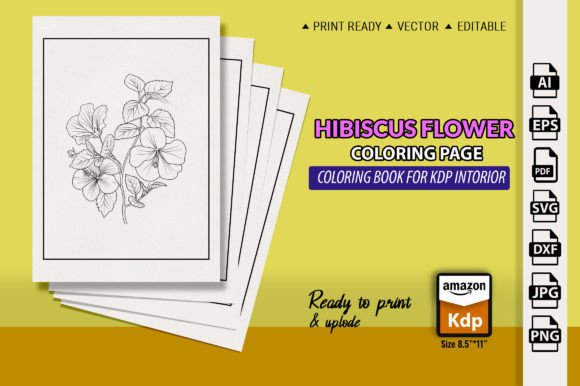
Most of the time, I scroll past digital coloring pages quickly. But when I spotted the Hibiscus Flower Coloring Books Page in a Coloring Pages Amp graphics bundle, I paused. The composition had the kind of clean, confident line work that reads beautifully under a needle. It’s not a soft, sketchy doodle. The hibiscus petals are full and deliberate, the leaves are well placed, and the entire layout feels like it was built to be seen from a distance — exactly what you want on a handmade product or a custom apparel piece.
The file is a vector Adobe Illustrator creation, sized at 8.5×11 inches. That immediately told me it could scale without losing crispness, which is a huge advantage when you’re planning to convert it into a machine embroidery design. The listing says it’s available in multiple formats, so I’d double-check that you’re getting at least one vector option — AI, EPS, or SVG — before you start digitizing. If you’re handed a high-res PNG instead, you can still work with it, but the pathing will take longer. For a professional embroidery project, vector is the smarter start.
The Tropical Mood That Sells
There’s no mistaking what this design is. A hibiscus flower carries instant vacation energy. It’s warm, welcoming, and a little bit nostalgic. In my experience, that mood translates directly into buyer engagement. When someone sees an embroidered patch or a tote bag design with a bold hibiscus, they don’t just see a flower — they feel the breeze. That emotional hook is worth more than a dozen generic floral patterns.
The Hibiscus Flower Coloring Books Page leans into that mood without overcomplicating it. The line art is detailed enough to feel like an adult coloring page, but the shapes are simple enough to stitch out cleanly. The petals have broad curves that would hold a satin stitch beautifully, and the leaf clusters could be tackled with a smooth fill stitch or even a textured running stitch for a lighter look. It’s a design that gives you room to interpret, which is a gift for any craft business owner.
Putting the Design to Work: A Custom Tote Bag Story
I recently had a client who runs a small beach boutique. She wanted a limited run of embroidered canvas totes that felt like a seaside souvenir but with a polished, handmade edge. The moment I saw the Hibiscus Flower Coloring Books Page, I knew I’d found the right starting point. I pulled the vector file into my digitizing software and began mapping out the flower for a 7×10-inch hoop — a size that would sit beautifully on the front pocket of a heavy cotton tote.
Because the original is a black-and-white line drawing, I had total freedom to choose thread colors. I went with a deep coral pink for the petals, a golden yellow for the stamen, and a leafy green with a slight blue undertone for the foliage. The outlines were converted to a medium-width satin stitch, and the inner areas received a light fill stitch density to keep the fabric from getting stiff. The result was a finished product that looked like it had been hand-drawn in thread — exactly the boutique feel my client wanted.
This is where the Hibiscus Flower Coloring Books Page really shines. It doesn’t come with a predetermined color palette, so you can adapt it to any season, any brand, any personalized gift that needs a tropical lift. One week I might stitch it in muted pastels for a baby blanket; the next week, I’ll go neon bright for a summer sweatshirt. That flexibility is rare in pre-made embroidery files.
Scaling the Hibiscus: Hoop Sizes and Smart Simplifications
At 8.5×11 inches, the original layout is practically a full-page design. That’s fantastic for large-format embroidery projects like jacket backs, oversized pillow covers, or roomy market totes. But not every hoop can handle that. If you’re planning to stitch on a 4×4 or 5×7 hoop, you’ll need to scale the artwork down — and that’s where some honest design judgment kicks in.
When I scaled the hibiscus to fit a 5×7 hoop, the thinner inner lines on the petals started to look dangerously close together. In a stitch density scenario, those tiny gaps can turn into a muddy mess. I ended up simplifying the interior detail, removing a few of the finer vein lines and widening the spaces between the remaining ones. The spirit of the flower stayed intact, but the stitch-out became cleaner and more reliable. If you’re selling small shop products like baby snap bibs or cosmetic pouches, that simplification step is essential. Your customers will never see what you removed, but they’ll definitely notice a professional, crisp sew-out.
Fabric and Stabilizer Moves That Make a Difference
I’ve tested florals on dozens of fabrics, and the fabric texture can make or break a design like this. On a smooth, medium-weight canvas tote, the hibiscus stitches up beautifully with a cutaway stabilizer. The outlines stay sharp, and the fill areas lie flat. On a stretchy sweatshirt, I add a layer of no-show mesh stabilizer and baste the fabric extra carefully — otherwise, the curved petals can distort slightly under tension.
For tea towel embroidery or linen kitchen items, a tear-away stabilizer works well, but I’d recommend a water-soluble topper to keep the stitches from sinking into the weave. If you’re stitching on dark fabric, remember that the original line art is black and white. You’ll need to adjust your thread colors accordingly. A bright goldenrod or even a soft white outline can make the flower pop against navy or charcoal, which is a smart trick for holiday embroidery gifts that feel elegant and intentional.
Choosing Thread Colors That Turn Line Art into Lush Stitches
One of the biggest advantages of starting with a Graphics asset like this is that you’re not locked into someone else’s color choices. The Hibiscus Flower Coloring Books Page is essentially a blank canvas. I’ve stitched it as a monochromatic coral design for a minimalist applique design on a linen apron, and I’ve also done a multi-color version with a shaded center that looked almost painted. The key is to test your thread palette on a scrap of the actual fabric you’ll be using. A color that looks perfect on the computer screen might blend into the background once it’s under natural light.
I always recommend doing a quick black-and-white printout of the design before digitizing. Tape it to your intended fabric at the actual size and step back. Does the composition still hold? Are the petals distinct? That simple mockup can save you hours of rework. For a digital embroidery file that you plan to sell repeatedly, that upfront test is even more critical — your buyers are trusting that the design will sew out well on their machines, with their threads, on their fabric.
Where to Use It, and Where to Hold Back
I’m confident placing this hibiscus on tote bags, flat-front sweatshirts, pillow covers, and roomy patches. It also works well on structured items like canvas aprons or denim jacket panels. But I’d be cautious with small, curved surfaces. A cap embroidery design needs to be compact and centrally focused, and the sprawling nature of this flower might fight the cap’s curve. I’d also avoid stitching it on extremely thin or sheer fabrics without a backing, because the density needed for the petal outlines could cause puckering.
For baby embroidery, I’d scale the design down significantly and use a soft, low-density fill. The original line art is bold, but a baby onesie doesn’t need a heavy stitch count. A lighter, breathable version with only the outline and a few accent stitches would be a sweet personalized gift without overwhelming the tiny garment.
The Commercial Angle: Making Products That Buyers Love
If you’re an Etsy seller or a craft fair vendor, you know that customers gravitate toward designs that feel both familiar and fresh. A hibiscus is familiar — it’s a classic tropical icon. But the Hibiscus Flower Coloring Books Page brings a freshness because it’s not a clip-art cliché. The line art has a hand-drawn quality that reads as artistic and thoughtful. When I listed a few tote bags with this design, buyers commented on the “beautiful sketch-like look” and the “vibrant but not garish” colors. That kind of feedback builds customer trust and repeat business.
Before you sell any finished product, though, you need to check the licensing. This is a digital printable created for KDP interiors, and it’s sold as a Graphics asset. That doesn’t automatically mean you can use it for commercial embroidery on physical goods. Some licenses allow personal use and small commercial runs, while others require an extended license for physical products. I always reach out to the creator or read the terms carefully. Protecting your small business means covering that legal base before you stitch a single piece.
A Quick Designer’s Checklist Before You Stitch
Over the years, I’ve learned that a great design becomes a reliable product only after you test it in the real world. Here’s what I run through before I commit to any new embroidery design, and the Hibiscus Flower Coloring Books Page is no exception:
- Check file formats: Make sure you have a vector version, not just a raster image. It will save you cleanup time.
- Test stitch on scrap fabric: Use the same fabric type and stabilizer you plan to sell. Look for thread breaks, looping, or puckering.
- Review stitch density: Wide open spaces are fine; crowded details may need to be thinned out. The flower’s center and leaf veins are usually the tightest spots.
- Confirm hoop size: Know your maximum stitch field and scale the design proportionally. Don’t squeeze it into a hoop that’s too small.
- Compare light and dark backgrounds: The same thread color can look completely different on cream versus black. Test both if you plan to offer options.
- Use the right stabilizer: Cutaway for knits, tear-away for wovens, topper for textured fabrics. Don’t skip this.
- Inspect small details: Print the design at actual size and look for elements that might disappear or become blobs when stitched.
- Verify licensing for commercial use: If you’re selling finished products, confirm that the license allows it. Keep a record of your permission.
This design has a lot going for it. It’s adaptable, emotionally appealing, and built on a solid vector foundation. It’s not a ready-to-stitch embroidery file, so you’ll need to invest the digitizing time, but for a craft business that wants to stand out with something more original than a stock pattern, the Hibiscus Flower Coloring Books Page is a smart, versatile asset. I’ll keep it in my library for those sunny, commission-ready projects where a little tropical warmth makes all the difference.